Strategic Alliance and Global Implications
Introduction to the Russia-Iran Strategic Partnership
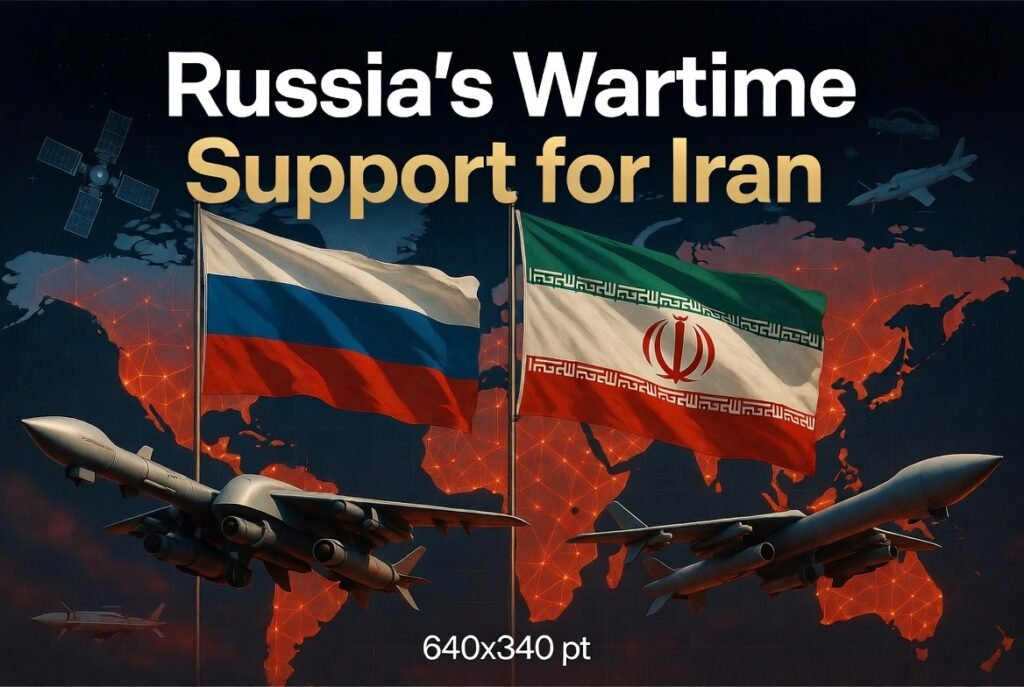
The growing partnership between Russia and Iran has become one of the most significant geopolitical developments shaping the modern international order. In 2026, this alliance attracted even more global attention after reports surfaced detailing Moscow’s wartime assistance to Tehran during escalating tensions involving the United States, Israel, and Iran. A recent policy memo published by the Middle East Institute highlighted the depth of this cooperation and warned that the Russia-Iran axis represents a serious strategic challenge for the West.
What makes this alliance particularly concerning is not merely the exchange of diplomatic support. The relationship now includes advanced military technology transfers, intelligence sharing, sanctions evasion mechanisms, nuclear cooperation, and coordinated propaganda campaigns. These actions reveal a partnership that extends far beyond convenience or temporary interests. Instead, Russia and Iran appear increasingly aligned in their desire to counter American influence and reshape regional power structures.
The significance of this partnership cannot be understated. While many geopolitical alliances fluctuate with changing leadership and economic conditions, the Russia-Iran relationship has steadily strengthened under pressure from Western sanctions and military confrontations. Like two isolated neighbours building a fortified bridge during a storm, Moscow and Tehran have discovered mutual strategic benefits in cooperation. Russia gains regional leverage and economic advantages, while Iran receives military support and political backing. This evolving partnership raises difficult questions for NATO, Middle Eastern allies, and the future balance of global power.
Why the Russia-Iran Alliance Matters in 2026
The year 2026 marked a turning point in the Russia-Iran relationship because wartime cooperation became more visible and operational. According to the policy memo, Russia supplied Iran with targeting intelligence, advanced drone technology, and military equipment during active conflict conditions. This level of support moved the alliance beyond diplomacy into direct strategic collaboration with tangible battlefield consequences.
One of the most alarming revelations involved Russian satellite intelligence assistance. Reports indicated that Russian orbital surveillance assets helped identify critical military and energy targets linked to the United States and its allies. Facilities such as Diego Garcia, Al Udeid Air Base in Qatar, and NATO-related locations were reportedly monitored before subsequent attacks. These developments illustrate how modern warfare increasingly depends on information dominance rather than only traditional firepower.
At the same time, Russia’s military-industrial support for Iran continued expanding. Moscow allegedly transferred advanced fibre-optic drone technology capable of bypassing electronic jamming systems. In modern combat environments, drones have become the equivalent of invisible hunters in the sky, capable of delivering devastating precision strikes. By providing such technology, Russia effectively enhanced Iran’s ability to challenge technologically advanced opponents in the region.
This partnership also matters economically and politically. Both countries have faced extensive Western sanctions, encouraging them to cooperate in sanctions evasion and parallel trade systems. Their collaboration through maritime trade routes in the Caspian Sea demonstrates how sanctioned states increasingly rely on alternative networks to survive economically. Such developments weaken the effectiveness of international sanctions regimes and complicate Western diplomatic strategies.
Russia’s Military Assistance to Iran
Russia’s role as a military supplier to Iran has existed for decades, but recent events suggest a dramatic expansion in both scale and sophistication. According to the MEI memo, Moscow continued producing and delivering fighter aircraft while training Iranian pilots throughout ongoing military operations. This demonstrates that Russia views Iran not simply as a customer but as a strategic military partner capable of extending Russian influence throughout the Middle East.
The transfer of advanced drone components represents one of the most dangerous aspects of this cooperation. Fibre-optic drone systems are particularly difficult to disrupt because they can maintain stable communication links even under electronic warfare conditions. These drones offer significant tactical advantages, allowing operators to strike with precision while minimising vulnerability to countermeasures. In modern warfare, this technology functions much like giving a chess player the ability to see multiple moves ahead while the opponent struggles in darkness.
Russia also reportedly committed to supplying Iran with thousands of missiles and hundreds of man-portable air-defence systems, commonly known as MANPADS. Such weapons significantly increase the threat environment for military aircraft and regional defence systems. When combined with Iranian proxy groups operating across the Middle East, these weapons create a broader security challenge that extends far beyond Iran’s borders.
The strategic consequences are enormous. Middle Eastern allies of the United States now face increasingly sophisticated threats supported by Russian military expertise. Regional stability becomes harder to maintain when state and non-state actors gain access to advanced technologies capable of disrupting air superiority and precision defence systems. This situation creates an arms race dynamic where neighbouring countries feel compelled to increase defence spending and modernise their own military capabilities.
Intelligence Sharing Between Russia and Iran
Intelligence cooperation forms the backbone of many strategic alliances, and the Russia-Iran partnership appears no different. According to reports referenced in the MEI memo, Russia provided expanded intelligence sharing during the 2026 conflict. This support reportedly included satellite imagery and targeting assistance for operations involving US-linked facilities and strategic energy infrastructure.
Modern warfare increasingly revolves around data, surveillance, and rapid decision-making. Satellites, drones, and cyber intelligence now shape battlefield outcomes just as much as tanks or fighter jets once did. By assisting Iran with intelligence gathering and targeting information, Russia effectively amplified Tehran’s operational reach and strike capabilities. This type of cooperation transforms intelligence into a force multiplier capable of shifting military balances.
The targeting of critical infrastructure is especially troubling. Energy facilities, military bases, and transportation networks represent the lifelines of national security and economic stability. When such targets are identified using advanced intelligence assets, the resulting attacks can generate both military and psychological consequences. Fear and uncertainty become strategic weapons in themselves.
Another dangerous dimension involves the broader message sent to Western allies. Russia’s willingness to support Iran during wartime demonstrates that geopolitical rivalries are increasingly interconnected. Conflicts in Eastern Europe, the Middle East, and Asia no longer operate independently. Instead, they resemble interconnected chessboards where moves in one region influence outcomes elsewhere. This interconnectedness complicates Western strategy because resources and attention must now be divided across multiple theatres simultaneously.
Economic Cooperation and Sanctions Evasion
Sanctions are designed to isolate governments economically and restrict their ability to fund military operations or destabilising activities. However, Russia and Iran have developed increasingly creative methods to bypass these restrictions. According to the MEI report, the Caspian Sea has emerged as a crucial corridor for bilateral trade and sanctions evasion.
Maritime trade routes across the Caspian Sea enable Russia and Iran to transport goods, weapons, and industrial materials while avoiding direct Western oversight. Shadow fleets operating under opaque ownership structures further complicate enforcement efforts. These networks function like underground tunnels beneath the global economic system, allowing sanctioned states to continue conducting trade despite international pressure.
The International North-South Transit Corridor also plays an important role in strengthening this economic partnership. By linking transportation routes through the South Caucasus and Central Asia, Russia and Iran have expanded logistical alternatives that reduce dependence on Western-controlled trade systems. Such corridors provide economic resilience while strengthening political ties between participating countries.
The effectiveness of sanctions, therefore, becomes increasingly questionable when major regional powers cooperate closely. Rather than isolating Russia and Iran individually, sanctions may unintentionally encourage deeper collaboration between them. This creates a paradox for policymakers: economic pressure intended to weaken adversaries can sometimes drive them closer together.
For global markets, the consequences are equally important. Rising energy prices triggered by regional instability have benefited Russia financially, especially as global demand for oil and gas remains volatile. Energy markets operate much like a tightly stretched rubber band—small geopolitical shocks can create dramatic price fluctuations with worldwide economic effects.
Russia’s Nuclear Cooperation With Iran
Perhaps the most strategically sensitive aspect of the Russia-Iran partnership involves nuclear cooperation. According to the policy memo, Russia signed agreements to construct eight nuclear power plants in Iran following the 2025 Israel-Iran conflict. The Russian state-owned nuclear company Rosatom resumed work on reactors at the Bushehr nuclear plant, deepening Moscow’s role in Iran’s nuclear infrastructure.
Officially, these projects are framed as peaceful civilian nuclear energy initiatives. Nuclear energy can indeed help countries diversify energy production and reduce dependence on fossil fuels. However, the distinction between civilian and military nuclear capabilities often becomes politically sensitive because many technologies involved in nuclear power generation overlap with those required for weapons development.
This cooperation raises concerns among Western governments and regional powers. Critics fear that expanded Russian involvement could accelerate Iran’s technical expertise and nuclear infrastructure development, even if indirectly. Nuclear programs are not simply about electricity production; they also symbolise national prestige, strategic autonomy, and geopolitical influence.
Rosatom itself has become an important instrument of Russian foreign policy. Through nuclear partnerships, Moscow extends long-term influence over energy sectors, infrastructure development, and regional diplomacy. Nuclear projects often require decades of technical cooperation, creating enduring dependencies between supplier and recipient countries. In this sense, nuclear cooperation acts like planting deep roots that continue shaping geopolitical relationships for generations.
The broader implications extend beyond the Middle East. If Russia and Iran deepen nuclear cooperation without significant international constraints, other regional powers may pursue expanded nuclear capabilities as a counterbalance. Such developments could accelerate regional arms races and undermine global non-proliferation efforts.
Propaganda and Information Warfare
Military cooperation is only one side of the Russia-Iran partnership. Information warfare and propaganda campaigns have also become central tools in advancing shared strategic objectives. According to the MEI memo, Russia has amplified Iran’s anti-Western messaging while portraying the United States as a destabilising and neocolonial power.
In today’s digital era, information spreads faster than missiles. Social media platforms, online news outlets, and state-sponsored media channels shape public perception on a global scale. Russia has developed extensive experience in strategic communication and disinformation campaigns, particularly during conflicts involving Ukraine and NATO. By supporting Iran’s narratives, Moscow expands its influence among audiences skeptical of Western policies.
Propaganda works most effectively when it combines truth, emotion, and selective manipulation. Rather than inventing entirely false narratives, modern information warfare often exaggerates existing grievances or fears. Economic inequality, military interventions, and historical distrust become fertile ground for anti-Western messaging.
This strategy has broader geopolitical objectives. Russia seeks to weaken Western unity by portraying American alliances as unreliable and exploitative. If US allies begin doubting Washington’s commitment or leadership, the effectiveness of collective security arrangements could diminish. In many ways, propaganda functions like erosion—slowly weakening trust and stability over time until larger cracks appear.
Countering such campaigns requires more than censorship or reactive messaging. Democratic governments must invest in credible journalism, transparent communication, and international cooperation against coordinated disinformation. Winning the information war ultimately depends on maintaining public trust and demonstrating consistency between stated values and actual policies.
Policy Recommendations for the United States
The MEI policy memo outlines several recommendations aimed at countering the growing Russia-Iran alliance. One major proposal involves targeted sanctions against Russian individuals and organisations involved in military assistance and intelligence sharing with Iran. Such sanctions aim to disrupt logistical networks, financial transactions, and defence cooperation channels.
Another recommendation emphasises increased support for Ukraine. The logic behind this strategy is straightforward: reducing Russia’s military capacity in Eastern Europe indirectly limits its ability to supply Iran. Modern geopolitical conflicts increasingly overlap, meaning actions in one theater can influence outcomes elsewhere. Supporting Ukraine, therefore, becomes part of a broader containment strategy against Russian global influence.
The memo also suggests stronger enforcement against sanctions evasion networks operating through the Caspian Sea and regional transit corridors. Secondary sanctions targeting facilitators in neighbouring regions could increase economic pressure on Russia and Iran alike. However, implementing such measures requires careful diplomacy to avoid alienating neutral or strategically important countries.
Countering propaganda campaigns is equally critical. The United States and its allies must strengthen public diplomacy, support independent journalism, and expose coordinated disinformation efforts. Information warfare cannot be defeated solely through censorship or technical controls; credibility and transparency remain essential.
The challenge for policymakers lies in balancing deterrence with stability. Excessive escalation risks broader regional conflict, while insufficient action may embolden aggressive partnerships. Navigating this balance requires coordinated alliances, strategic patience, and long-term planning rather than short-term reactions.
Global Consequences of the Russia-Iran Axis
The strengthening relationship between Russia and Iran has consequences that extend far beyond bilateral cooperation. For the Middle East, the alliance increases regional polarisation and military competition. Countries already facing instability, proxy conflicts, and sectarian tensions may experience heightened insecurity as advanced weapons and strategic technologies spread across the region.
NATO and Western allies also face growing strategic challenges. Russia’s support for Iran demonstrates its willingness to project influence far beyond Eastern Europe. This complicates defence planning because threats increasingly emerge across multiple interconnected regions. Military resources, intelligence coordination, and diplomatic efforts must now address simultaneous challenges rather than isolated crises.
Energy markets remain another major area of concern. Geopolitical instability involving Iran and Russia directly affects global oil and gas prices. Energy shocks can trigger inflation, economic uncertainty, and political unrest worldwide. In this sense, regional conflicts no longer remain regional—they ripple outward through interconnected financial and trade systems.
The alliance also reflects broader transformations in the international order. As Western dominance faces increasing challenges, alternative partnerships between sanctioned or rival states are becoming more common. Russia and Iran exemplify how geopolitical isolation can encourage strategic cooperation among countries seeking to resist external pressure.
Whether this alliance continues expanding will depend on future conflicts, economic pressures, and diplomatic developments. Yet one reality is already clear: the Russia-Iran partnership represents more than a temporary convenience. It is evolving into a multidimensional strategic relationship with profound implications for global security.
Conclusion
Russia’s wartime support for Iran highlights the emergence of a deeper strategic alliance that combines military cooperation, intelligence sharing, economic coordination, nuclear partnerships, and information warfare. The relationship reflects a shared desire to counter Western influence while advancing regional and geopolitical objectives.
The implications are enormous for the United States, NATO allies, Middle Eastern governments, and global security institutions. Advanced drone technology, intelligence cooperation, and sanctions evasion networks create immediate operational challenges, while nuclear cooperation and propaganda campaigns represent long-term strategic concerns.
Understanding this alliance requires looking beyond individual conflicts and recognising the interconnected nature of modern geopolitics. Wars, sanctions, cyber operations, energy markets, and media narratives are increasingly intertwined. The Russia-Iran axis demonstrates how state partnerships can evolve into powerful geopolitical forces capable of reshaping international dynamics.
For policymakers, the challenge lies in developing coordinated responses that address both immediate threats and long-term structural changes. Strategic patience, alliance-building, and credible diplomacy will be essential in navigating an increasingly complex global landscape.
FAQs
1. Why is Russia supporting Iran militarily?
Russia supports Iran because both countries share strategic interests in countering Western influence, resisting sanctions, and expanding regional power. Military cooperation also strengthens Russia’s geopolitical influence in the Middle East.
2. What role does intelligence sharing play in the Russia-Iran alliance?
Intelligence sharing provides Iran with advanced surveillance, targeting data, and strategic information that improve military effectiveness during conflicts involving US and allied interests.
3. How does the Caspian Sea help Russia and Iran evade sanctions?
The Caspian Sea enables maritime trade routes that bypass many Western-controlled monitoring systems, allowing both countries to transport goods, weapons, and industrial materials more discreetly.
4. Why is Rosatom’s involvement in Iran controversial?
Rosatom’s nuclear cooperation with Iran raises concerns because civilian nuclear infrastructure can potentially strengthen technological capabilities linked to broader nuclear ambitions.
5. What are the global implications of the Russia-Iran partnership?
The alliance affects Middle East stability, NATO security planning, global energy markets, sanctions enforcement, and the broader balance of international power.